VapoFil Official Website › Journal › No Ratio, No Percentage
No Ratio, No Percentage: What "Extract" Alone Tells You On Four Of Seven VapoFil Rows
Tongkat ali on this panel states a 100:1 ratio. Horny goat weed states 10:1. Boron states a 5% chelate. Saw palmetto, wild yam, sarsaparilla and nettle leaf state none of that — just an amount and the word "Extract." That is not unusual for this aisle, and it is not automatically a problem. It is, however, a gap a reader can learn to spot on any bottle, and this panel happens to print both kinds of row side by side, which makes it a good place to learn the difference.
All seven rows, and which ones state a method
The VapoFil supplement-facts page prints seven rows in a fixed order. Reading straight down the panel, here is what each one states about how the raw plant became the amount in the capsule.
| Ingredient | Amount | Ratio or % stated? | What is actually declared |
|---|---|---|---|
| Saw Palmetto Berry Extract | 20 mg | No | "Extract" only |
| Wild Yam Root Extract | 20 mg | No | "Extract" only |
| Sarsaparilla Root Extract | 20 mg | No | "Extract" only |
| Nettle Leaf Extract | 20 mg | No | "Extract" only |
| Boron Amino Acid Chelate | 20 mg | Yes | "5%" boron content stated |
| Tongkat Ali | 10 mg | Yes | "100:1 extract," ~1,000 mg equivalent |
| Horny Goat Weed | 8 mg | Yes | "10:1 extract," ~80 mg equivalent |
Three of the seven rows state a method. Four do not. Both kinds of row are legal and both are common on labels in this category; they are simply not equally informative.
What a ratio or a percentage actually tells you
A stated ratio, such as tongkat ali's "100:1," is a claim about concentration relative to the raw plant: one part of the finished extract is presented as equivalent to roughly one hundred parts of dried starting material. A stated percentage, such as boron's "5%," is a claim about the content of one specific component inside the extract — here, elemental boron inside the chelate. Both are narrow, specific claims, and both let a reader do arithmetic a bare amount does not: dividing back to an approximate raw-material equivalent, or multiplying out to a specific compound's actual weight. The companion piece on this panel's 100:1 ratio and the piece on what a 5% chelate supplies both walk through that arithmetic in full.
Neither figure tells you which specific compound is doing anything, and neither is a substitute for a clinical trial. What they do is make a row comparable: two products both stating "100:1" tongkat ali extract are describing a similar concentration process, even if the brands differ, in a way two products both just saying "tongkat ali extract" are not.
What "Extract" alone tells you: not much
A row that says only "Saw Palmetto Berry Extract, 20 mg" with no ratio and no percentage is not lying, and it is not necessarily a lower-quality ingredient. It is, however, close to uninformative about strength. "Extract" can mean a mild water infusion or a concentrated solvent-based preparation; it can mean the whole berry, ground and lightly processed, or a fraction isolated to enrich one class of compound. Two products can both print "Saw Palmetto Berry Extract, 20 mg" and contain meaningfully different amounts of the plant's active compounds, and a reader comparing the two has no printed figure that would reveal the difference.
This is not a defect unique to VapoFil. It is the ordinary state of a large share of the supplement aisle, and it is exactly why the three rows on this same panel that do state a ratio or percentage stand out as more informative, not why the other four are unusual.
The full panel, printed in full
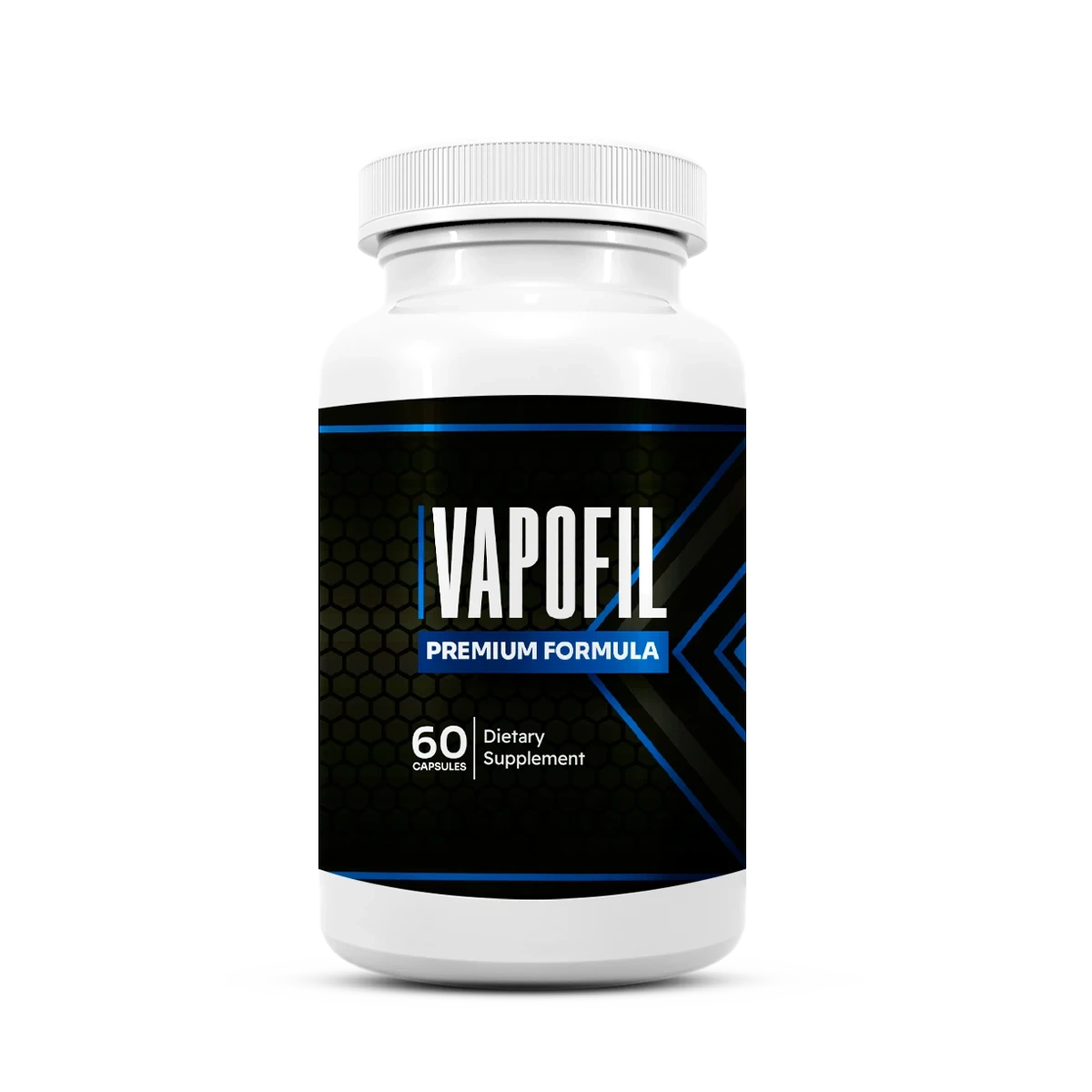
Seven rows, every stated ratio and percentage transcribed exactly as the label prints them.
One bottle $89 · six bottles $294 · 60-day money-back guarantee
Order VapoFilThe worked example: one plant, two very different products
Saw palmetto is the clearest illustration on this panel of why the missing detail matters, because it is the one ingredient here with a large enough clinical literature to show the gap directly. A 2023 Cochrane review pooling randomised trials of Serenoa repens extracts broadly found no meaningful benefit over placebo for urinary symptoms. A separate 2016 systematic review and meta-analysis, looking specifically at Permixon — one named, hexane-extracted, lipidosterolic preparation with a defined and reproducible fatty-acid profile — found a modest benefit on some measures that the pooled, mixed-method literature did not show as clearly.
The 2016 review's own authors were explicit about why they isolated Permixon rather than accepting the pooled result: different saw palmetto products, made by different solvents and processes, are not the same chemical product even when the label uses the same plant name. A related 2005 laboratory study used that same named extract to demonstrate a specific enzyme-inhibition mechanism, again tied to a defined product rather than to "saw palmetto" as an undifferentiated category.
VapoFil's saw palmetto row states none of that. It does not say whether the extraction used hexane, ethanol or water; it does not name a fatty-acid profile or reference a specific commercial preparation. That does not mean it is a poor extract. It means the row cannot be matched with confidence to either side of the research split above, because the research split exists precisely along the lines this label leaves blank. The full saw palmetto evidence review on this journal goes further into what the trials measured; this article's point is narrower and applies to the label mechanics alone.
The four unstandardised rows, briefly
The same blank applies to the other three rows without a stated ratio or percentage, and it is worth naming each briefly rather than assuming the point only concerns saw palmetto.
- Wild Yam Root Extract. Carries diosgenin, a plant compound with laboratory and animal interest; the one controlled human trial used a topical cream, not a capsule, and reported no hormonal change. No ratio or percentage is stated, so there is no way to gauge how concentrated this row's diosgenin content is relative to that trial's cream.
- Sarsaparilla Root Extract. A traditional ingredient with no clinical trial at any dose, of any preparation. Because there is no trial to compare against, the missing ratio matters less for this row specifically — there is no trial dose to divide back to in the first place.
- Nettle Leaf Extract. The best-known nettle trial evidence concerns nettle root, not leaf, and used a specific extract at a stated daily amount. Even if this row's leaf-versus-root question is set aside, no ratio or percentage is printed here either, so a second layer of the same uncertainty sits on top of the plant-part question.
None of these three rows can honestly borrow a specific trial's result the way a stated ratio would allow, for the same structural reason as saw palmetto: the label does not print the detail a comparison would need.
Three questions to ask of any "Extract" row
This is a generalisable habit, not one specific to VapoFil, and it travels to any bottle in this aisle.
- Does the row state a ratio or a percentage at all? If not, the amount printed cannot be divided back to an approximate raw-material equivalent, and any comparison to a trial dose is guesswork.
- If it does state one, does it also name the compound the percentage refers to? "5% boron" names the compound. A bare "standardised extract" without naming what it is standardised to is a smaller step up from nothing than it looks.
- Does the trial literature for this ingredient use a named, defined preparation, or a mix of different extracts under one plant name? Saw palmetto's split above is the clearest example: pooling different preparations produces a different, weaker answer than isolating one defined product.
Why this is worth knowing beyond this one bottle
Extract ratios and percentages are the closest thing a supplement label offers to a comparability standard, and most labels in this category do not print them consistently across every row — this one included. A reader who checks for the presence of a ratio or percentage before assuming two products are equivalent will catch a real source of variation that "same ingredient name, same milligram amount" hides completely. It will not tell you whether either product works; that question depends on the trial evidence for the specific compound and dose, which is a separate check covered elsewhere on this journal.
It also reframes a common shopping mistake: lining up two bottles side by side and treating identical milligram figures as identical products. A shopper comparing this panel's saw palmetto row against a rival brand's "Saw Palmetto Extract, 20 mg" is not comparing two samples of the same material; both labels could be printing the truth and still describe meaningfully different extracts, because neither one is required to say which extract it is. The only rows on any label where that comparison is even approximately safe are the ones, like this panel's boron and tongkat ali entries, that name a percentage or a ratio explicitly. Everywhere else, matching milligrams is matching a number, not a substance.
That asymmetry is also why a stated ratio is worth more attention when reading a label than its small print size suggests. It is one of the few places on a supplement panel where a manufacturer volunteers information that makes their own product easier to hold to a standard, rather than harder. A panel that prints more of these details, as this one does for three of its seven rows, has made itself more checkable than a panel that prints none at all — even when, as here, four rows still fall on the wrong side of that line.
- Three of VapoFil's seven rows state a ratio or percentage; four state only "Extract" and an amount.
- A ratio or percentage lets a reader estimate raw-material equivalence or a specific compound's weight; bare "Extract" does not.
- Saw palmetto's own research literature shows why this matters: a defined extract (Permixon) shows different results than the pooled, mixed-method literature.
- Wild yam, sarsaparilla and nettle leaf share the same unstated-method gap, for different underlying reasons.
- Checking for a stated ratio or percentage is a habit that applies to any supplement label, not just this one.
Bottom line
A bare "Extract" on a label is not evidence of a bad ingredient, and a stated ratio is not evidence of a good one. What the two rows differ in is comparability: one can be checked against a trial dose with arithmetic, and one cannot be checked at all. Four of VapoFil's seven rows fall on the harder-to-check side of that line, and knowing which four they are is the whole value of reading a panel like this one row by row rather than taking the ingredient list on faith.
References
- Franco JV, Trivisonno L, Sgarbossa NJ, Alvez GA, Fieiras C, Escobar Liquitay CM, Jung JH. Serenoa repens for the treatment of lower urinary tract symptoms due to benign prostatic enlargement. Cochrane Database Syst Rev. 2023;6(6):CD001423. PMID 37345871. https://pubmed.ncbi.nlm.nih.gov/37345871/
- Novara G, Giannarini G, Alcaraz A, Cózar-Olmo JM, Descazeaud A, Montorsi F, Ficarra V. Efficacy and Safety of Hexanic Lipidosterolic Extract of Serenoa repens (Permixon) in the Treatment of Lower Urinary Tract Symptoms Due to Benign Prostatic Hyperplasia: Systematic Review and Meta-analysis of Randomized Controlled Trials. Eur Urol Focus. 2016;2(5):553-561. PMID 28723522. https://pubmed.ncbi.nlm.nih.gov/28723522/
- Habib FK, Ross M, Ho CK, Lyons V, Chapman K. Serenoa repens (Permixon) inhibits the 5alpha-reductase activity of human prostate cancer cell lines without interfering with PSA expression. Int J Cancer. 2005;114(2):190-194. PMID 15543614. https://pubmed.ncbi.nlm.nih.gov/15543614/
- Barry MJ, Meleth S, Lee JY, et al; CAMUS Study Group. Effect of increasing doses of saw palmetto extract on lower urinary tract symptoms: a randomized trial. JAMA. 2011;306(12):1344-1351. PMID 21954478. https://pubmed.ncbi.nlm.nih.gov/21954478/