VapoFil Official Website › Journal › What A 5% Chelate Supplies
What A 5% Chelate Actually Supplies, And Why It Is Not 20 mg
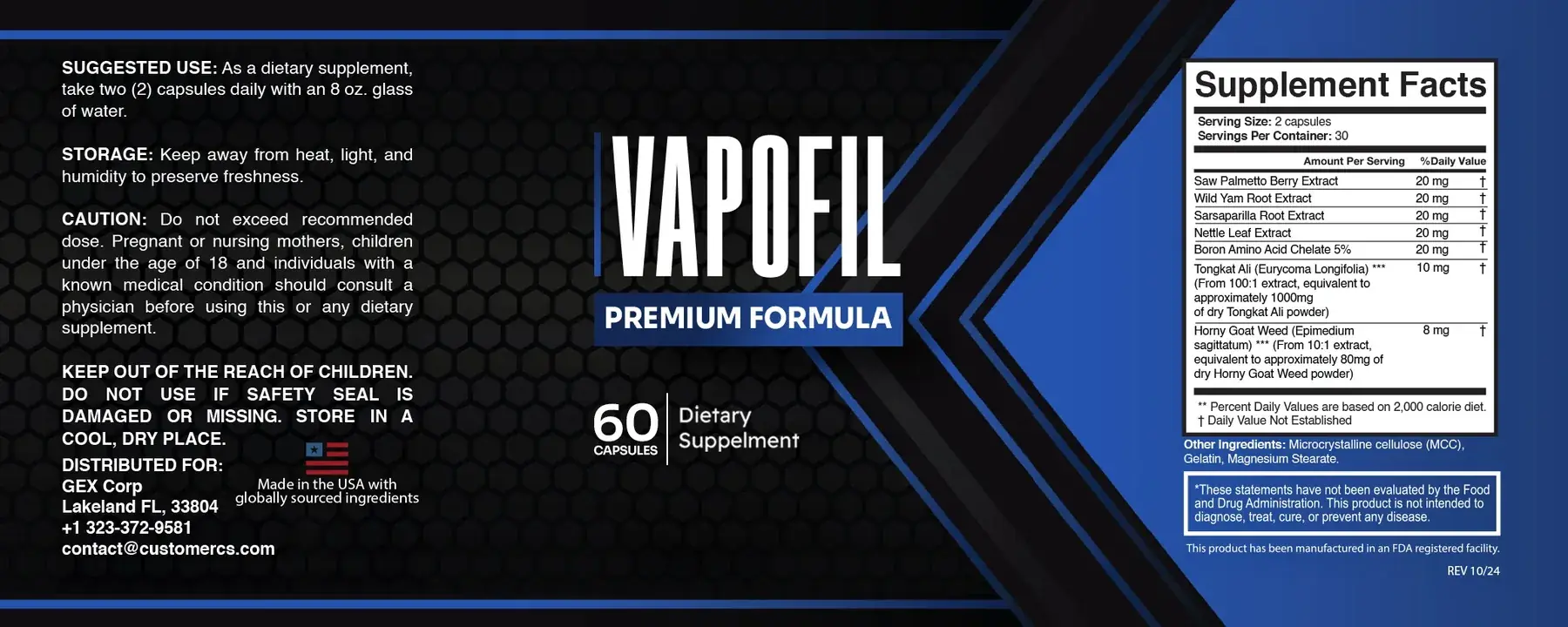
A row reading “boron amino acid chelate 5%, 20 mg” supplies about one milligram of boron. The other nineteen are the carrier. It is the most common piece of hidden arithmetic on a supplement panel, it takes five seconds to do, and almost nobody does it.
What a chelate is, briefly
Minerals are difficult to absorb as bare ions, so supplement manufacturers bind them to something. An amino acid chelate is a mineral attached to one or more amino acids, which gives the body a familiar-looking molecule to transport.
The consequence for a label is that the finished ingredient weighs far more than the mineral inside it. Most of a chelate, by mass, is the carrier: the amino acids doing the binding. A chelate declared at 5% is 5% mineral and 95% everything else.
This is not a trick and it is not unique to boron. Every mineral on every supplement label works this way, and the better labels tell you which way round the number is being reported.
The arithmetic
Multiply the weight by the percentage. That is the whole method.
| How the row is printed | What the percentage refers to | What you actually get |
|---|---|---|
| Boron amino acid chelate 5%, 20 mg | 5% of the chelate is elemental boron | About 1 mg of boron |
| Boron citrate 5%, 100 mg | The same convention | About 5 mg of boron |
| Boron, 3 mg | Nothing: this is the element itself | 3 mg of boron |
| Boron amino acid chelate, 20 mg | Percentage not stated | Unknown, and not calculable |
The fourth row is the one to watch for. A chelate with no percentage printed cannot be converted into an amount of the mineral at all.
So a panel printing 20 mg of a 5% chelate is printing an amount of finished ingredient, and the amount of the mineral is one milligram. Both figures are honest. Only one of them is the number you would compare with anything.
The fourth row in that table is the one worth watching for on other labels. A chelate with no percentage stated cannot be converted at all, and the amount of mineral it supplies is genuinely unknown to the reader. That is a real gap in disclosure and it is common.
What one milligram of boron is
Having done the conversion, the next question is whether the answer is a lot or a little, and for boron the answer is: about a normal day.
Reviews of boron in human nutrition put typical dietary intake in roughly this range for people eating an ordinary mixed diet with fruit and vegetables in it. Boron is not scarce in food: it turns up in apples, raisins, nuts, pulses and coffee, among plenty else.
An earlier review asked whether boron is nutritionally relevant at all in people whose diets already contain it, which is the standing open question rather than a settled one. There is no established requirement for boron, which is why the panel carries a dagger against the row rather than a percentage Daily Value.
- Twenty milligrams of a 5% chelate supplies about one milligram of boron.
- That is within the range an ordinary diet provides, rather than above it.
- No Daily Value is established for boron, which is what the dagger on the panel means.
- This website makes no claim for the row, and records the refusal in writing.
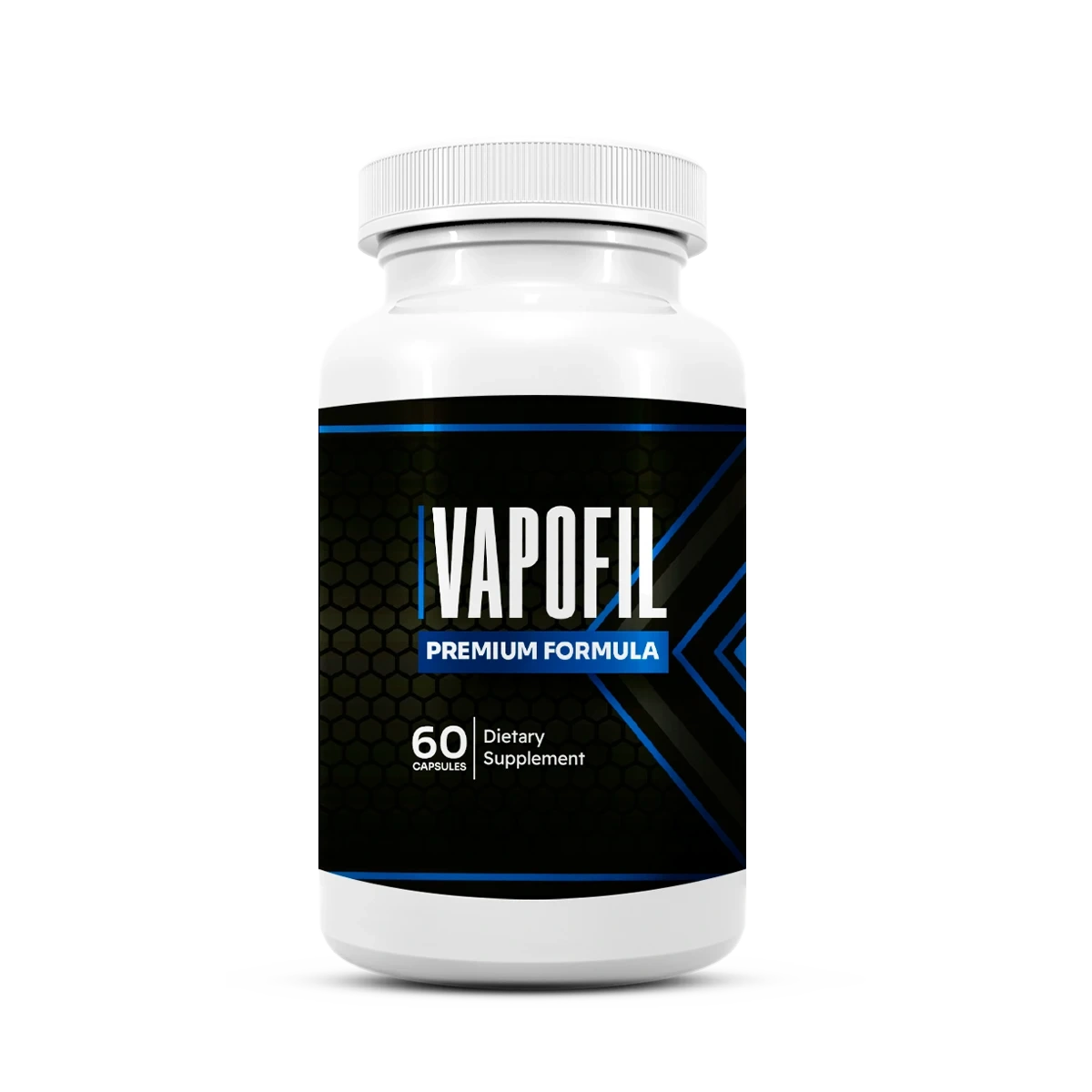
Every VapoFil row carries a printed amount, which is what makes this possible
Seven actives, no proprietary blend, and a percentage stated on the one row where a percentage changes the answer. Two capsules a day, sixty to a bottle.
One bottle $89 · six bottles $294 · 60-day money-back guarantee
Order VapoFil On The Official WebsiteTwo capsules a day · 60 per bottle · lot VAP-26/VA-2757
The same pattern everywhere else on a label
Boron is a clean example because the conversion is dramatic. The pattern is general.
| Where else this pattern appears | What is printed | The conversion |
|---|---|---|
| Standardised botanical extracts | Standardised to 20% marker, 100 mg | 20 mg of the marker compound |
| Mineral salts generally | Magnesium oxide 400 mg | About 240 mg of elemental magnesium |
| Ratio concentrates | 10:1 extract, 8 mg | 80 mg of dry herb equivalent |
| Vitamin esters | Vitamin E as an acetate, in mg | A conversion that differs by form |
Every one of these is a number that means something other than it appears to. The habit of converting before comparing is worth more than any single fact.
Notice that two of those four appear on this same panel. The concentrate rows print a ratio, which needs multiplying upward, and the boron row prints a percentage, which needs multiplying downward. A reader who does neither will come away with two numbers that are both wrong in opposite directions.
It is also worth noticing which way each convention flatters the product. A ratio makes a small number look large. A percentage makes a large number small. Labels tend to print whichever convention is kinder, and this one prints both, which is a point in its favour rather than against it.
What the dagger on the panel means
Every row on this panel carries a dagger in the right-hand column instead of a percentage, and it is worth knowing what that symbol is doing there, because it is routinely misread as a warning.
The right-hand column of a Supplement Facts panel is the percentage Daily Value: how much of an established daily reference amount a serving provides. For vitamin C or iron that number exists and is printed. For an ingredient with no established reference amount there is nothing to express a percentage of, and the convention is to print a dagger and explain it in a footnote.
Almost every botanical falls into that category, and so does boron. There is no established requirement for it, which is the same point the review literature has been making for years: the open question is whether boron is nutritionally relevant at all in people whose diets already supply a milligram or so.
So a panel full of daggers is not a panel of unknowns or a panel of problems. It is a panel of ingredients for which the regulatory framework has never set a number, which describes most of what is sold in this aisle. What would be a problem is a panel with no amounts at all, and this one does not have that.
- A dagger means no Daily Value has been established for that ingredient.
- It is expected on botanicals and on trace minerals without a set requirement.
- It says nothing about safety, quality or whether the amount is sensible.
- A footnote on the panel explains it, as this one does.
- The thing to look for instead is whether an amount is printed at all.
The related misreading is the opposite one: treating a very large percentage as a recommendation. A panel showing eight hundred per cent of a Daily Value is not showing a considered dose; it is showing that the reference amount for that nutrient is small and the manufacturer has put in considerably more than it. Whether that is sensible depends entirely on the nutrient, and the percentage itself does not answer the question.
Between them, those two misreadings account for most of what a percentage column does to a reader. A dagger is read as a gap and a large figure is read as generosity, and neither reading is in the number.
Why a printed percentage is good news
A label that declares 5% has handed you the tool to reduce its own headline number by a factor of twenty. That is not the behaviour of a page trying to mislead you.
The comparison worth making is with the alternative. A great many labels print a mineral chelate as a bare milligram figure with no percentage at all, and a reader cannot tell whether that 20 mg is 1 mg of mineral or 4 mg. Those labels look identical to this one at a glance and they are strictly less informative.
The same applies across this panel. Seven printed amounts, both extract ratios declared, the plant part named on every botanical row. None of that makes the amounts larger, and all of it makes them checkable, which is the precondition for having an opinion about them at all. The rows that do not stand up are visible precisely because the label showed its working — the panel page goes through all seven, and the ingredients page covers what each plant has actually been trialled for.
The habit worth building
Three questions, asked of every row on every label, in about a minute.
- Is this the compound or the element? If there is a percentage, it is the compound and you have work to do. If there is no percentage and the ingredient name includes a salt or a chelate, you cannot answer the question at all.
- Is this an extract or the plant? A ratio or a standardisation means an extract, and the conversion runs the other way.
- What would the comparable trial figure be? Once both conversions are done, the amount can be set beside a published dose. Before they are done, it cannot.
Those three questions are most of what separates reading a panel from looking at one. They apply equally to products this desk does not sell, and the longer version — eight questions for any bottle in this aisle — is in the choosing guide. The NIH Office of Dietary Supplements is the other place worth reading on how a supplement label is put together, and it has nothing to sell you.
References
- Nielsen FH. Update on human health effects of boron. J Trace Elem Med Biol. 2014;28(4):383-7. PMID 25063690. https://pubmed.ncbi.nlm.nih.gov/25063690/
- Nielsen FH. Is boron nutritionally relevant? Nutr Rev. 2008;66(4):183-91. PMID 18366532. https://pubmed.ncbi.nlm.nih.gov/18366532/
- Schöttner M, Gansser D, Spiteller G. Lignans from the roots of Urtica dioica and their metabolites bind to human sex hormone binding globulin (SHBG). Planta Med. 1997;63(6):529-32. PMID 9434605. https://pubmed.ncbi.nlm.nih.gov/9434605/
- Franco JV, Trivisonno L, Sgarbossa NJ, et al. Serenoa repens for the treatment of lower urinary tract symptoms due to benign prostatic enlargement. Cochrane Database Syst Rev. 2023;6(6):CD001423. PMID 37345871. https://pubmed.ncbi.nlm.nih.gov/37345871/
- Dietary Supplements: What You Need to Know. Office of Dietary Supplements, National Institutes of Health. https://ods.od.nih.gov/factsheets/WYNTK-Consumer/