VapoFil Official Website › Journal › What A 100:1 Ratio Means
What A 100:1 Extract Ratio Actually Means On A Supplement Label
Ten milligrams of a 100:1 extract sounds like a rounding error and is printed on the label as the equivalent of a full gram. Both statements are true, the arithmetic connecting them is correct, and the impression it creates is almost always wrong. Here is why, and what to look for instead.
What an extract ratio actually is
A ratio on a botanical label describes a reduction. A 100:1 extract means a hundred units of raw plant material were processed down to one unit of finished extract. Ten kilograms of dried root becomes a hundred grams of powder, and that powder goes into the capsule.
The purpose is concentration. Most of what is in a dried root is cellulose, starch and water-soluble material nobody is interested in, and a capsule can only hold so much. Extracting removes the bulk and keeps whatever the solvent dissolves, which is how a gram of root becomes something that fits alongside six other ingredients.
It is a real and useful process. What it is not is a dose, and the distance between those two ideas is where almost every misunderstanding about this kind of label lives.
The arithmetic, done properly
The multiplication is the easy part and the label usually does it for you.
| What the label prints | The arithmetic | What it is equivalent to |
|---|---|---|
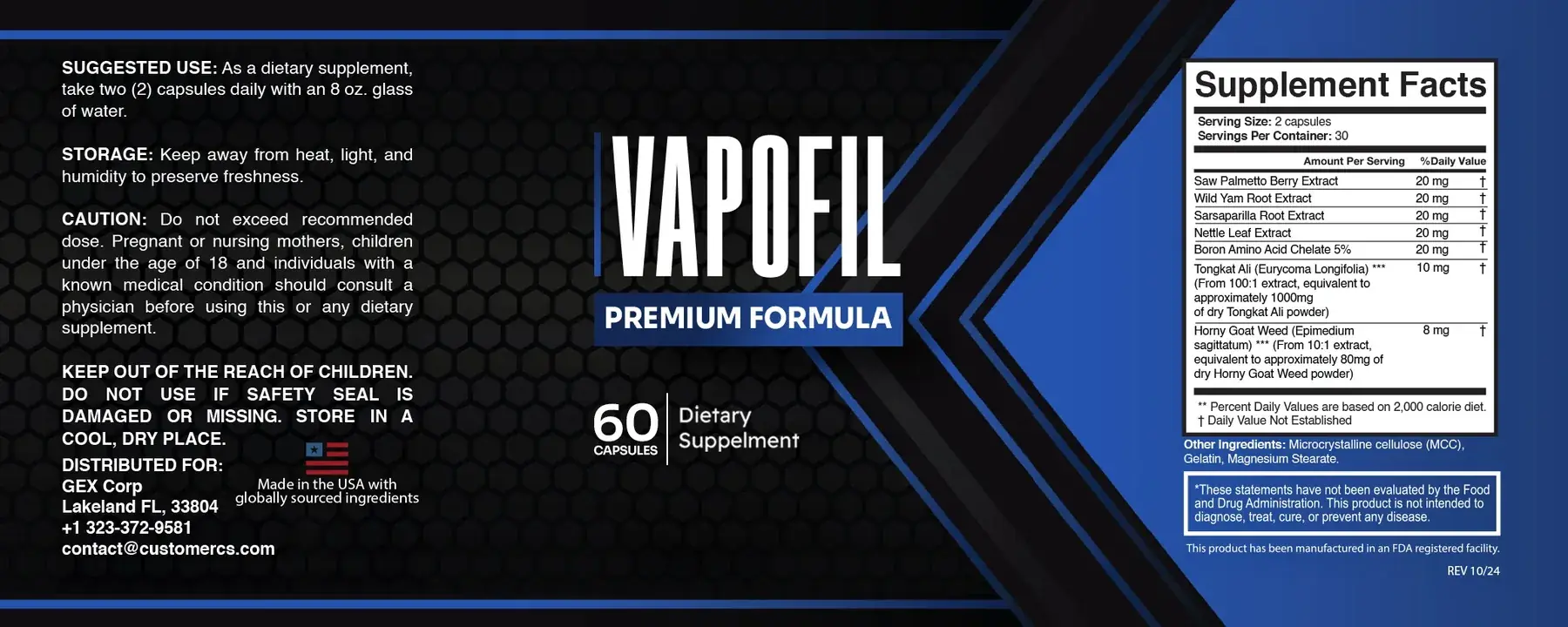
| Tongkat ali, 10 mg of a 100:1 extract | 10 × 100 | 1,000 mg of dry root powder |
| Horny goat weed, 8 mg of a 10:1 extract | 8 × 10 | 80 mg of dry herb |
| A hypothetical 50 mg of a 4:1 extract | 50 × 4 | 200 mg of dry material |
| A hypothetical 200 mg of an unstated extract | Unknown | Cannot be calculated |
Every line above is simple multiplication and the label does it for you on both of its concentrate rows, which is more disclosure than most of this aisle offers.
So the 10 mg row on this panel genuinely does derive from about a gram of root, and the 8 mg row from about 80 mg of dry herb. Anybody checking the label's own equivalence statements will find they hold.
The trouble starts when that gram gets compared with something. A reader who knows that clinical trials of this plant used a few hundred milligrams a day will look at a thousand-milligram equivalent and conclude the capsule is generously dosed. That conclusion does not follow, and the next two sections are about why.
What a ratio does not tell you
A ratio describes the input to a process. It says nothing about the output.
Extraction is not a single operation. It depends on the solvent — water, ethanol, a mixture, supercritical carbon dioxide — on temperature, on time, on how finely the material was milled, and on which part of the plant went in. Two manufacturers can both produce something they accurately label 100:1 and end up with powders that differ several-fold in the compounds anybody cares about.
The problem is not hypothetical. A review of Epimedium standardisation describes exactly this for another plant in this category: material sold under one name varying widely in its marker content between sources and between batches. The same variability applies to any concentrate defined by a ratio alone.
- A 100:1 made with hot water extracts different compounds from a 100:1 made with ethanol.
- A ratio can be raised by drying more aggressively, which concentrates nothing useful.
- Different plant parts give different ratios for the same yield of active material.
- Nothing in the number tells you which compounds survived the process.
- Two products at the same ratio and the same milligram figure are not interchangeable.
A ratio is a statement about manufacturing. A standardisation is a statement about the product. Only the second can be compared with a clinical trial.
What the clinical trials actually used
This is where the distinction stops being theoretical.
The 2022 systematic review and meta-analysis of tongkat ali pooled clinical trials and found an increase in serum total testosterone across them. It is the strongest evidence in this whole aisle. Look at what the trials in it administered, though, and a pattern appears immediately: the 2012 trial used a standardised freeze-dried water extract, the 2021 multicentre study ran 100 and 200 mg a day of a standardised aqueous root extract, and the six-month 2021 trial used a standardised extract alongside a training programme.
Every one of them specified a standardised preparation, not a ratio concentrate. That is deliberate: a trial protocol has to describe something a second laboratory could reproduce, and 100:1 does not meet that bar.
| A ratio extract | A standardised extract | |
|---|---|---|
| What is declared | How much raw material went in | How much of a named compound comes out |
| Example | 100:1 | Standardised to 2% eurycomanone |
| Varies with | Solvent, temperature, plant part, process | Nothing: the figure is the specification |
| Comparable between brands | No | Yes, if the same marker is used |
| What the clinical trials used | Rarely | Almost always |
| What this panel prints | Both concentrate rows | Neither |
The right-hand column is what a trial protocol specifies. A ratio describes a manufacturing process rather than a product.
Which means the honest statement about a 10 mg row of a 100:1 concentrate is not that it is under-dosed or well-dosed. It is that the amount is not comparable with any published trial, because the trials measured a different kind of thing.
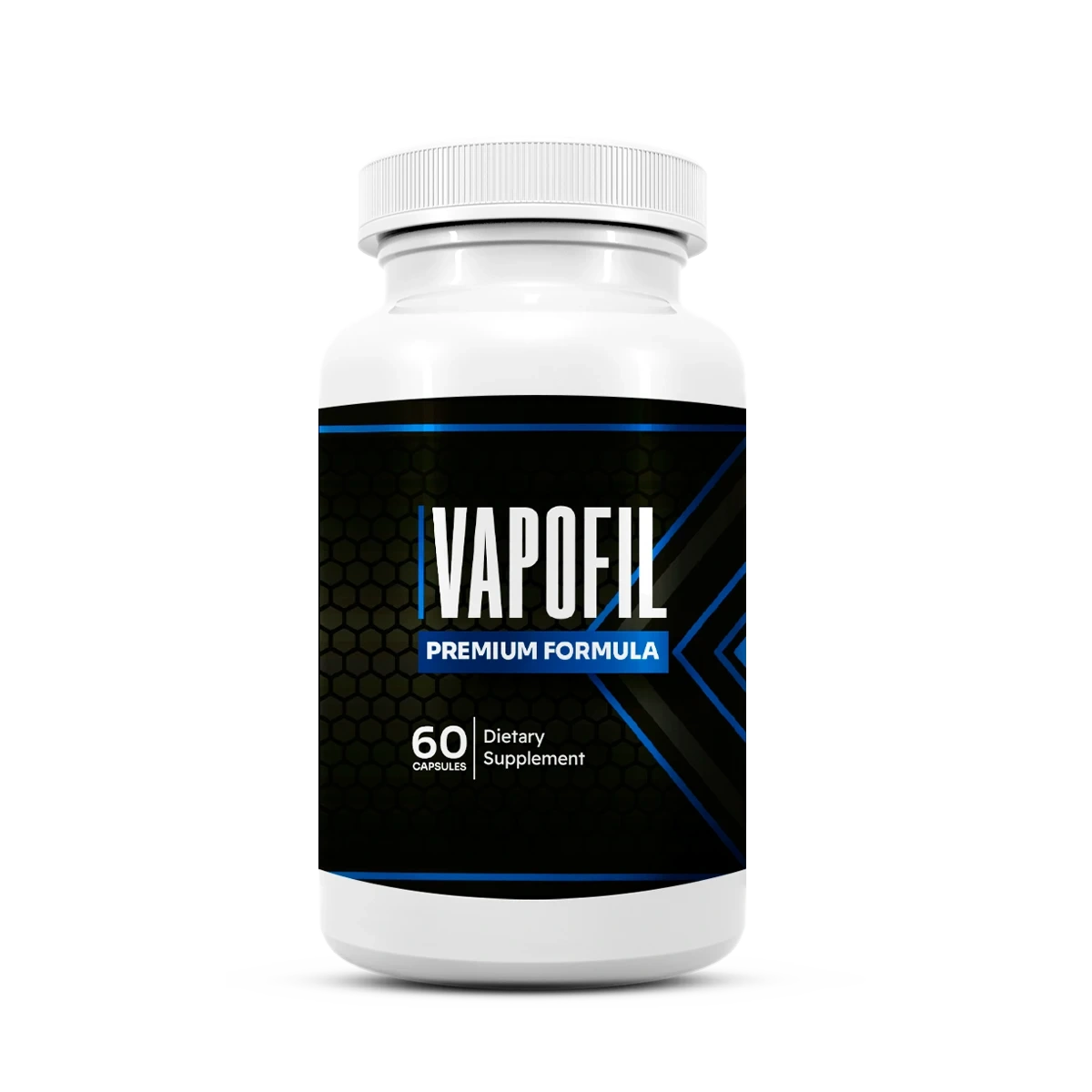
The VapoFil panel prints both ratios, which is why this arithmetic is possible
Seven actives, every amount printed, and both concentrate rows carrying a declared ratio and a dry-weight equivalent. Two capsules a day, sixty to a bottle.
One bottle $89 · six bottles $294 · 60-day money-back guarantee
Order VapoFil On The Official WebsiteTwo capsules a day · 60 per bottle · lot VAP-26/VA-2757
Both concentrate rows on this panel
Applied to the bottle this website sells, the two rows come out differently and it is worth being precise about each.
Tongkat ali at 10 mg of a 100:1 extract has a real evidence base behind the plant and no way to line this amount up against it. The dry-weight equivalent of a gram is arithmetically correct and is not the same measure as the 100 to 400 mg of standardised extract the trials ran. A reader who wants to compare has to know the eurycomanone content, and the label does not state it.
Horny goat weed at 8 mg of a 10:1 extract is a simpler case, because there is nothing to compare it against. No randomised trial of Epimedium or icariin in men exists at any dose, so the row cannot be called generous or thin. It is untested, which is a different category of statement, and the next post in this journal is about what that means.
- It declares a ratio on both concentrate rows rather than printing a bare milligram.
- It prints the dry-weight equivalent itself, so a reader does not have to multiply.
- It gives an amount for all seven actives, with no proprietary blend anywhere.
- It states no standardisation for either concentrate, which is the figure that would make the comparison possible.
What a fully disclosed concentrate row would look like
It is worth describing, because a reader who knows what good looks like can spot the gap on any label in about three seconds.
A complete concentrate row names four things: the plant and the part used, the extract ratio, the amount of extract, and a standardisation expressed as a percentage of a named marker compound. Something like Eurycoma longifolia root, 100:1 extract, 10 mg, standardised to 2% eurycomanone. From that a reader can calculate the amount of marker compound present and set it beside a trial that reported one.
Almost no consumer label in this aisle prints the fourth element. The reason is partly cost — assaying every batch for a marker compound is a real expense — and partly that once a percentage is printed, a competitor can undercut it and a customer can compare. A number that can be compared is a number that can be lost on.
Which is why the sensible reading of a bare ratio is neither outrage nor reassurance. It is that the label has told you what it is willing to tell you, and that the comparison you want to make is not available on the shelf.
- The plant and part. Root, bark, leaf, berry. Printed on this panel for every botanical row.
- The ratio. Printed on both concentrate rows here.
- The amount of extract. Printed on all seven rows here.
- The standardisation. Not printed anywhere on this label, or on most labels in this aisle.
How to use a ratio when reading any label
Four habits, in the order that saves the most time.
- Do the multiplication first. A ratio with no dry-weight equivalent printed beside it is asking you to do arithmetic the label could have done. Do it, and write the answer in the margin.
- Then discount what it implies. The dry-weight figure is real and it is not a trial-comparable dose. Treat it as an upper bound on the raw material involved.
- Look for a standardisation. A stated percentage of a named marker compound is the strong disclosure. Its absence is not a scandal; it is the norm on consumer labels, and it is the reason most of this aisle cannot be compared with its own citations.
- Credit the label for the ratio anyway. A concentrate printed as a bare milligram with no ratio at all is strictly less informative, and a good deal of the shelf does exactly that.
None of those four requires any chemistry. They require a willingness to treat a number on a label as a question rather than an answer, which is most of what reading a supplement panel consists of.
The same discipline applied to every other row on this bottle is on the supplement facts page, and the wider version of it — eight questions for any label in this aisle — is in the choosing guide.
References
- Leisegang K, Finelli R, Sikka SC, Panner Selvam MK. Eurycoma longifolia (Jack) Improves Serum Total Testosterone in Men: A Systematic Review and Meta-Analysis of Clinical Trials. Medicina (Kaunas). 2022;58(8):1047. PMID 36013514. https://pubmed.ncbi.nlm.nih.gov/36013514/
- Ismail SB, Wan Mohammad WM, George A, et al. Randomized Clinical Trial on the Use of PHYSTA Freeze-Dried Water Extract of Eurycoma longifolia for the Improvement of Quality of Life and Sexual Well-Being in Men. Evid Based Complement Alternat Med. 2012;2012:429268. PMID 23243445. https://pubmed.ncbi.nlm.nih.gov/23243445/
- Chinnappan SM, George A, Pandey P, et al. Effect of Eurycoma longifolia standardised aqueous root extract-Physta on testosterone levels and quality of life in ageing male subjects: a randomised, double-blind, placebo-controlled multicentre study. Food Nutr Res. 2021;65:5647. PMID 34262417. https://pubmed.ncbi.nlm.nih.gov/34262417/
- Leitão AE, Vieira MCS, Pelegrini A, et al. A 6-month, double-blind, placebo-controlled, randomized trial to evaluate the effect of Eurycoma longifolia (Tongkat Ali) and concurrent training on erectile function and testosterone levels in androgen deficiency of aging males (ADAM). Maturitas. 2021;145:78-85. PMID 33541567. https://pubmed.ncbi.nlm.nih.gov/33541567/
- Yong EL, Wong SP, Shen P, et al. Standardization and evaluation of botanical mixtures: lessons from a traditional Chinese herb, Epimedium, with oestrogenic properties. Novartis Found Symp. 2007;282:173-88. PMID 17913231. https://pubmed.ncbi.nlm.nih.gov/17913231/